Preservation Issues

From Mad Men to Preservation


Conservancy Board Member Fred Papert

Conservancy Board Member Fred Papert denies he’s the model for Don Draper on Mad Men, but there’s no doubt his experience as a leading advertising executive has helped him become one of the City’s top preservation strategists.

“Mad Men has nothing to do with ads I must say,” Papert says. “I gather it is probably a great soap opera.”

The popularity of Mad Men has once again put the spotlight on Papert’s accomplishments. Before he began rescuing the west end of Manhattan’s 42nd Street from 50 years of neglect or creating a powerful campaign to see Moynihan’s station come to fruition; the native New Yorker was among a select group of creative minds who pushed advertising into its golden age. Papert depicts that time very differently from AMC’s award winning series.

“We stood up to our clients when we had to. We did what we had to do. How unlike what you see on Mad Men,” Papert says. “I saw it once and I do know Mad Men is not the golden age of advertising.”

Preservation like politics is local. A struggle to preserve Papert’s neighborhood sparked the famed ad man’s shift from introducing giants like Xerox to the U.S. to launching massive campaigns to preserve the City’s architectural history.

“I lived on a block that was the victim of a preservation battle,” he says. “I really changed my major.”

In 1976 the retired senior partner in the firm Papert, Koenig and Lois left advertising to create the 42nd Street Corporation, which is a non-profit dedicated to preserving one of Manhattan’s most renowned streets.

The Corporation built Theater Row, a complex of off and off-off Broadway theaters and restaurants between 9th and 10th Avenues; planned the reclamation of the historic 7th and 8th Avenue blocks; worked with the late Jacqueline Kennedy Onassis in the successful renovation of Grand Central Station; built new headquarters and stables for the Mounted Unit of the New York Police Department between 11th and 12th Avenues; and partnered the development of a market-rate apartment building between 10th and 11th Avenues.

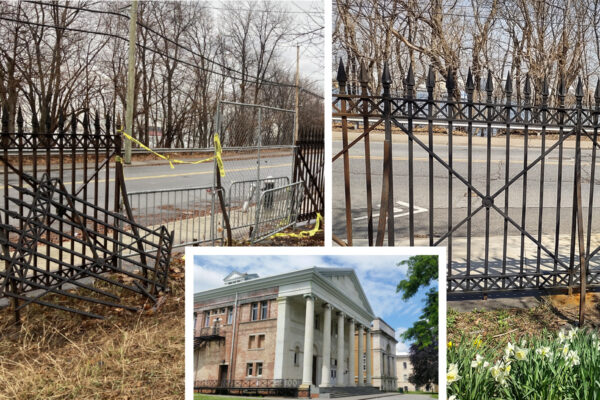
The Corporation also created the 42nd Street Fund. The Fund provides grants and soft loans to not-for-profit organizations wishing to get into the real estate business. It has provided support for the preservation of Brooklyn’s Erasmus Academy Building (see related story). The success of Theatre Row has strengthened the 42nd Street Fund and allows for the continued support of important projects to improve New York City.

Integrity is a common thread Papert sees between the advertising industry in the late ‘60s and ‘70s and architecture. At 84 years old Papert does not shy away from doing what he feels is right.

“The minute you begin to compromise your work I think you’ve sort of had it. I think that applies generally. It matters gigantically in architecture.”